The call started as irritation.

Then worry.
Then fear.
Malcolm Harris did not miss work.
He didn’t oversleep. He didn’t forget. He didn’t disappear without saying something. At 25, Malcolm was the kind of young man who called in if he was running five minutes late. Responsibility wasn’t forced on him — it was stitched into him.
So when his father couldn’t reach him Wednesday morning, something felt wrong.
By noon, wrong turned into urgent.
By evening, the family had already filed a missing person report.
“He is going to work,” his aunt, Tyronza Davis-Jackson, kept saying. “And if he’s not, he’s going to call.”
But Malcolm hadn’t called.
And his phone — that glowing digital lifeline we all depend on — had been sitting in one place since 10:49 a.m.
The location pinged from a quiet stretch of Skyline Drive.

A vacant house.
The kind people drive past without noticing.
That’s when the family did something that would later spark debate across the city: they went themselves.
Some say families shouldn’t investigate. They should wait. Let the system work.
But what parent, what aunt, what brother, waits calmly when their loved one vanishes?
Tyronza tracked the address, drove to Skyline Drive, and flagged down a nearby officer. She didn’t storm the house. She didn’t force entry. She simply pointed.
“This one,” she said.
Police entered.
Minutes later, the first strip of yellow tape went up.
Tyronza says she felt the weight before anyone spoke the words.
“When I saw that first piece of yellow tape go up,” she said, “it just weighed heavy on me.”
Inside the vacant home, Malcolm Harris was found dead from a gunshot wound.
He would have turned 26 that Saturday.
Just like that, a missing person case became a homicide.
And the questions began.
Malcolm’s gray 2020 Nissan Sentra was gone.
Stolen.
Police confirmed it.
But that only made the grief sharper.
“If you wanted something from him,” Tyronza said, her voice breaking, “Malcolm was just that type of person — he would give it to you.”
That statement has echoed across Jackson since.
Because Malcolm wasn’t described as reckless. Or combative. Or involved in street drama.
He was described as musical.
Faith-driven.
Church-focused.
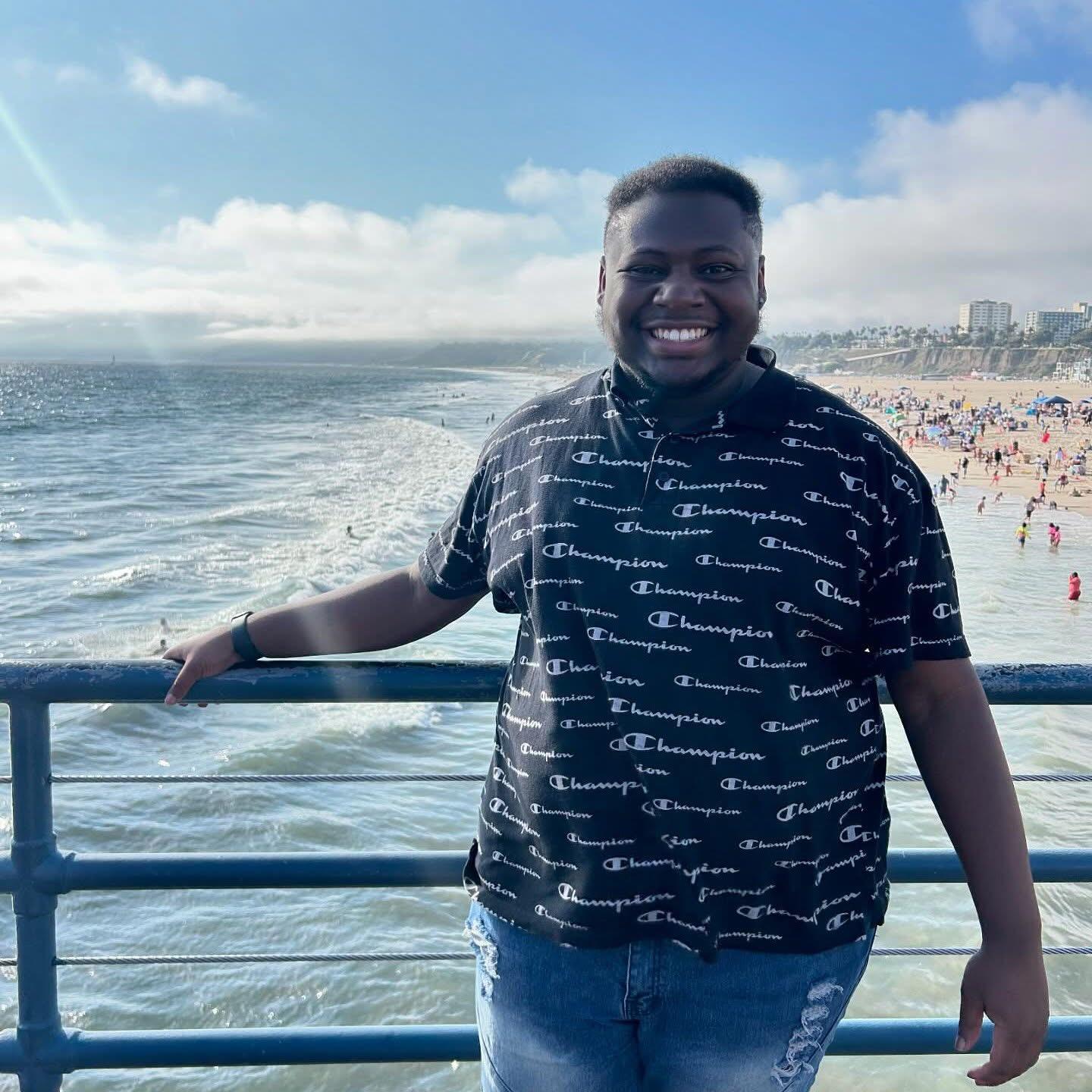
“He loved to sing,” Tyronza said. “He was very focused in the church. But more so than anything — his smile. Malcolm would give you the clothes off his back.”
He was also his parents’ last surviving child.
His brother died eight years ago.
Malcolm wasn’t just a son. He was what remained.
And now he was gone.
For many in the community, the tragedy has reopened a painful, uncomfortable conversation: How many more young Black men have to die before something changes?
Jackson has battled violent crime headlines for years. Some residents say police response times are too slow. Others say families are forced to act because they don’t trust the system to move fast enough.
Was this another case of that?
Should the family have been the ones tracking his phone?
Should officers have acted sooner?
Or did they act exactly when they were told?
These questions ripple beneath the grief.
And then there’s the vacant house.
Who owns it?
Why was it accessible?
How does a young man end up dead inside a property no one was watching?
In neighborhoods across the city, abandoned homes have become silent witnesses to violence. They don’t scream. They don’t testify. They just stand there — boarded, forgotten, waiting.
Malcolm’s death now ties Skyline Drive to another story the city wishes it didn’t have.
But beyond policy debates and public frustration is something far more personal.
A family that searched.
A family that hoped.
A family that drove to that address believing — maybe he was hurt, maybe his phone was stolen, maybe there was some explanation.
No one drives to a pinged location expecting to watch crime tape go up.
No one prepares for that.
Tyronza has a message for the person responsible.
“You’re not God,” she said. “You don’t have that right.”
Her words weren’t polished. They weren’t political. They were raw.
And they’ve sparked another difficult conversation.
If this was about a car — a Nissan Sentra — was a life worth that?
If it was about robbery, could it have ended differently?
If Malcolm truly was the type to hand over what he had, what level of desperation or cruelty does it take to still pull the trigger?
In the days since, social media has filled with tributes. Church members posted clips of Malcolm singing. Friends shared photos of his grin — wide, open, unguarded.
People use words like “angelic.”
People always do.
But what makes this story controversial isn’t who Malcolm was.
It’s how it ended.
Some residents are furious at rising crime.
Some blame city leadership.
Some blame poverty.
Some blame guns.
Some blame individual choices.
Everyone agrees on one thing: another young man is gone.
And the pattern feels familiar.
A missing report.
A location ping.
A vacant property.
A gunshot.
A grieving family.
A stolen vehicle.
Police Chief Tyree Jones confirmed the investigation is active. Detectives are working leads. They’re searching for the gray Nissan Sentra.
But investigations move at the pace of procedure.
Grief moves at the pace of shock.
Malcolm’s birthday is Saturday.
Instead of planning candles, the family is planning something else.
His mother and father now face the unbearable truth that both of their sons are gone.
And that reality has reignited another debate: how families of victims are left to carry trauma long after headlines fade.
Counseling isn’t automatic. Financial support isn’t guaranteed. Community outrage burns hot — and then cools.
But for this family, there is no cooling.
There is only before Skyline Drive.
And after Skyline Drive.
In the end, Malcolm Harris becomes two stories at once.
He becomes the smiling, singing church kid who would give you anything.
And he becomes another statistic in a city fighting to outrun violence.
Both are true.
And that’s what makes it heavy.
Because the tragedy isn’t just that he died.
It’s that he died in a way that feels preventable.
If someone wanted his car.
If someone wanted money.
If someone wanted anything at all.
According to the people who loved him, he would have handed it over.
Instead, someone chose finality.
Now, a yellow strip of tape on Skyline Drive marks the spot where hope ended.
And a family is left asking the same question so many others have asked before them:
How many more?